Attic mold is the single most common mold call we get in Nassau and Suffolk. Homeowner climbs up to store holiday decorations, sees dark staining on the sheathing, panics, googles, calls. The next thing that happens determines whether the problem is actually fixed — or whether it comes back in 18 months.
Why LI attics mold so often
Long Island's climate — hot humid summers, cold winters with frequent freeze-thaw, moderate maritime humidity year-round — creates attic condensation conditions most of the year. When warm humid indoor air leaks into a cold attic, it condenses on the underside of the roof sheathing. If the attic can't exchange that moist air for dry outside air fast enough, wood gets wet and mold grows.
Three root causes account for 90% of LI attic mold:
1. Bath fan venting into the attic
Bathroom exhaust fans are supposed to vent to outside. In older LI homes (anything pre-1990 we see this often), fans vent into the attic instead. Every shower dumps humid air directly onto the sheathing. A family of four takes 4-6 showers a day — that's significant moisture into the attic year-round.
2. Blocked or undersized soffit ventilation
Passive attic ventilation requires intake at the soffits and exhaust at the ridge. Blown-in insulation often covers soffit intakes — choking the airflow. Without replacement air coming in, ridge vents and gable vents can't actually exhaust anything. Result: stagnant moist air.
3. Missing or insufficient attic insulation
Low R-value attic insulation allows heated indoor air to rise into the attic through ceiling penetrations (can lights, plumbing stacks, attic hatches). The warm air cools on contact with cold sheathing — condensation, then mold.
What effective attic remediation looks like
- Identify and fix all bath/dryer/kitchen vents currently terminating in attic — retrofit through roof or side wall
- Confirm soffit intakes are clear; install baffles to keep insulation from blocking them
- Verify ridge vent is actual cut-through vent (not just decorative) and not blocked by roofing felt or nails
- Air-seal ceiling penetrations from below (around can lights, pipes, the attic hatch)
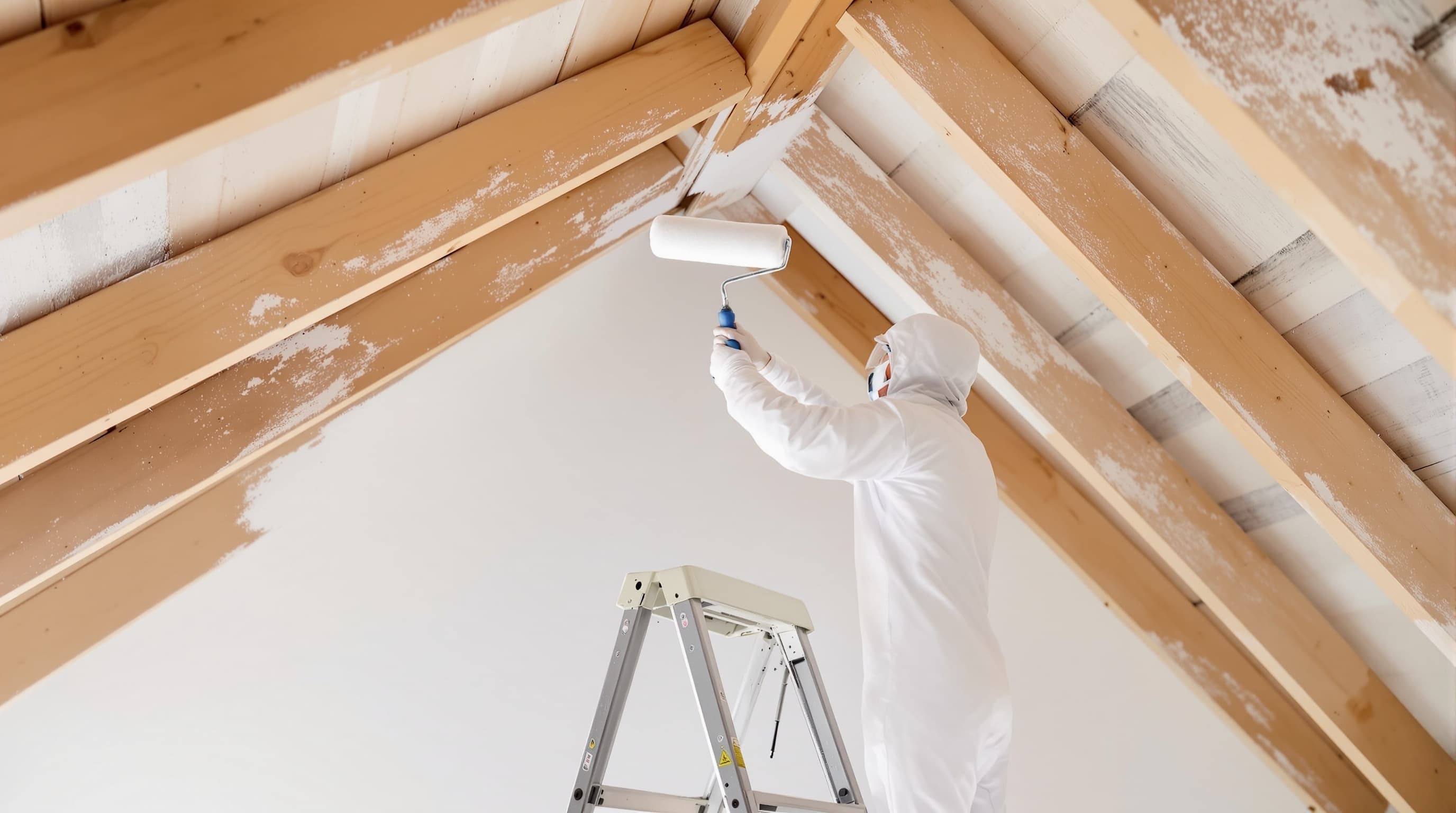
- Treat sheathing — HEPA sand, antimicrobial application, encapsulation coating if warranted
- Add or top up attic insulation to R-49+ where structurally feasible
What doesn't work
- Fogging or bombing the attic with antimicrobial sprays (kills surface spores, leaves substrate colonization intact)
- Installing a powered roof vent without fixing soffit intakes (creates negative pressure that pulls conditioned air into attic — makes condensation worse)
- Replacing sheathing without fixing the underlying moisture source
- Dehumidifier in the attic (temporary fix, doesn't survive a cold snap)
Cost expectations
Treatment-only scopes run $2,000–$3,500 and often fail. Full ventilation-correction-plus-treatment scopes run $3,500–$6,500 and last. Insurance rarely covers attic mold unless it's tied to a specific water event (roof leak, ice dam damage).
Pre-purchase due diligence
If you're buying a LI home, the attic is where mold most often shows up in inspections. Budget for a separate mold-specific attic assessment — your general home inspector often flags "dark staining on sheathing" without differentiating surface fungus from active colony. A NYLMB assessor can tell the difference.
Need help with your specific situation?
We do free on-site assessments across Long Island.
NYLMB-licensed, IICRC-certified, insurance-experienced. Call (631) 625-8807 or request an estimate online.